
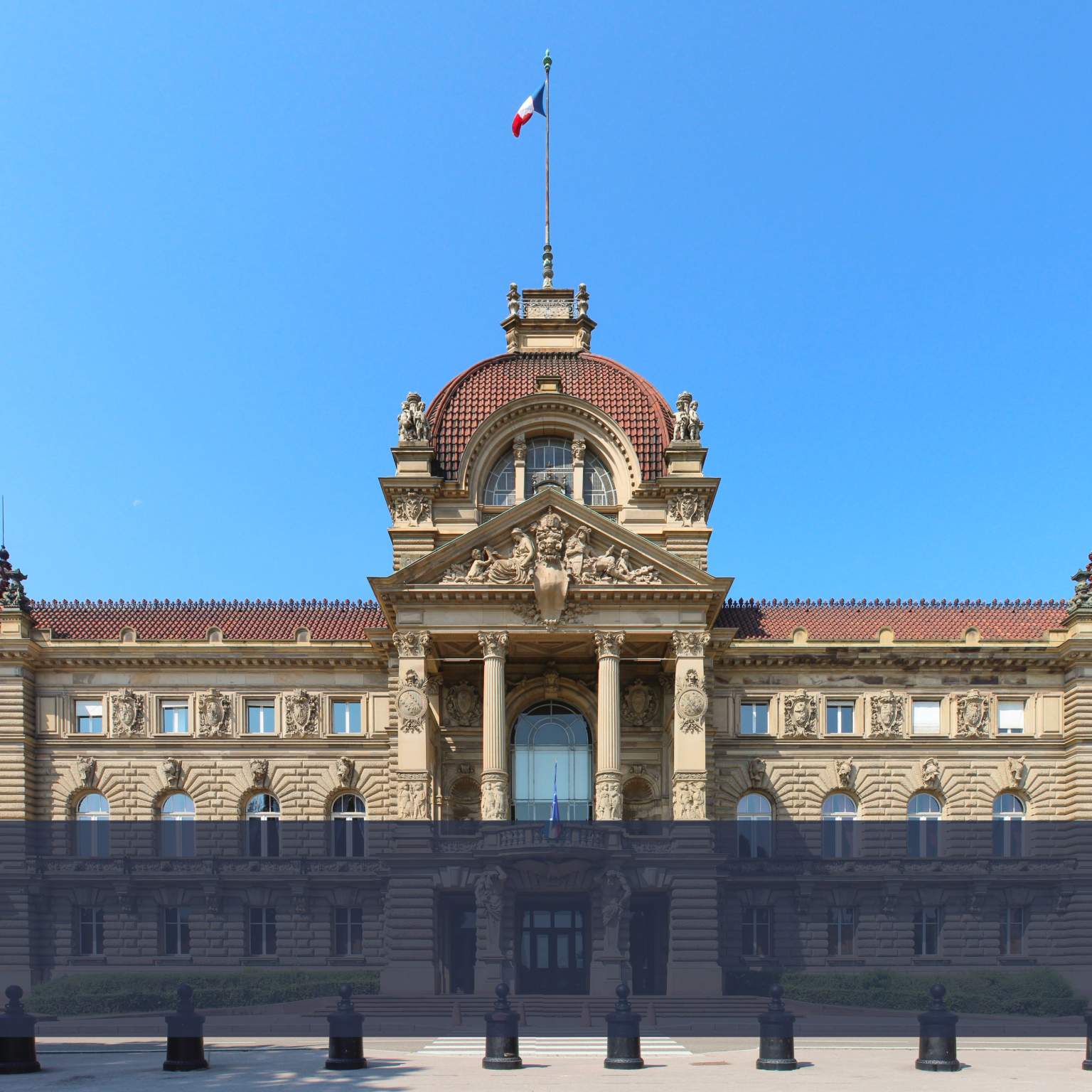
Strasbourg's Neustadt
Strasbourg is not only its cathedral and its half-timbered houses. Just north of the Grande-Île, another district tells a very different story: the Neustadt, the "new city" built by the Germans between 1871 and 1918. Long looked down on, it is now a UNESCO World Heritage site and stands out as one of the most spectacular urban ensembles in the city. Here is how to see it in a new light.
What is the Neustadt?
After the French defeat of 1870 and the Treaty of Frankfurt, Strasbourg became German and the capital of the Reichsland of Alsace-Lorraine. To display the power of the new Empire, the authorities launched a monumental extension of the city, north of the old town. They named it Neustadt, literally the new city. Within a few decades, the surface area of Strasbourg was almost doubled. On 9 July 2017, UNESCO extended to the Neustadt the listing already enjoyed by the Grande-Île, bringing the two districts together under the title "Strasbourg, Grande-Île and Neustadt".
A district designed as a showcase
The overall plan was entrusted to Jean-Geoffroy Conrath, winner of the urban planning competition. He laid out wide avenues, created perspectives and drew an imperial axis linking the great official buildings. The inspiration is partly Haussmannian, but the styling remains resolutely Germanic: neo-Gothic, neo-Renaissance, neo-Baroque, then Art Nouveau, the famous Jugendstil, on the residential buildings. This blend gives the Neustadt its very distinctive look, both monumental and eclectic. One thing makes the place unique: it is today the largest surviving ensemble of imperial German architecture, since equivalent districts across the Rhine were largely destroyed during the Second World War.
The must-sees
The heart of the district is Place de la République, the former Kaiserplatz. Around a large circular garden, several monumental buildings face one another:
- The Palais du Rhin, the former imperial palace (Kaiserpalast) built between 1883 and 1888, recognisable by its massive dome.
- The National and University Library, the BNU, France's second-largest library with more than three million documents.
- The National Theatre of Strasbourg, housed in the former parliament of Alsace-Lorraine.
- Two twin buildings home to the prefecture and the former military governor's residence.
From this square runs Avenue de la Liberté, leading to the Palais Universitaire, a superb neo-Renaissance building inaugurated in 1884. Conrath intended this face-to-face between the palace of power and the palace of knowledge. Further on, Avenue des Vosges and the streets around Place de l'Université line up elegant Art Nouveau facades that hurried visitors never notice.
Our walking route
The simplest option is to start at Place de la République, walk around the monuments, then head up Avenue de la Liberté to the Palais Universitaire and its garden. Allow a good hour on foot, two if you take the time to look up at the details. Most of the official buildings cannot be visited, except during the European Heritage Days in September, but the BNU lobby and the Palais Universitaire gallery are open on weekdays. To fit this walk into a wider programme, take a look at our itinerary for visiting Strasbourg in 2 days, and carry on towards the European district nearby.
From Hôtel Origami, in Cronenbourg, the Neustadt is just a few minutes away by tram.
Neustadt and Grande-Île, the two faces of Strasbourg
What makes Strasbourg unique is this dialogue between two cities. On one side the medieval Grande-Île, its lanes and its cathedral; on the other the Neustadt and its imperial avenues. UNESCO listed the whole as a single "European urban scene", testimony to two cultures that succeeded one another on the same riverbanks. Walking from one district to the other in the same day means crossing nearly a thousand years of history in a few steps. And between two visits, treat yourself to a break with our best addresses for eating in Strasbourg or a detour via the city's museums.
Fancy taking the time to explore both sides of Strasbourg? Hôtel Origami welcomes you a few minutes from the centre, in a quiet, design-led setting. Book your stay directly to enjoy it.
Frequently asked questions
Why is Strasbourg's Neustadt a UNESCO World Heritage site?
Because it is the largest and best-preserved ensemble of imperial German architecture and town planning from the 1871-1918 period. In 2017, UNESCO added it to the already listed Grande-Île, forming a unique "European urban scene".
What is there to see in the Neustadt?
Place de la République and its monuments (Palais du Rhin, BNU, National Theatre), Avenue de la Liberté, the Palais Universitaire and the Art Nouveau facades around Place de l'Université.
What is the difference between the Neustadt and the Grande-Île?
The Grande-Île is the medieval centre of Strasbourg, with the cathedral and the Petite France. The Neustadt is the 19th-century German district, with wide avenues and monumental architecture. Both are UNESCO-listed.
Can you go inside the Neustadt buildings?
Most are administrative buildings closed to the public. Some open during the European Heritage Days in September. The BNU lobby and the Palais Universitaire gallery remain accessible on weekdays.
Article checked in September 2026, details to be confirmed on the official websites.